What guests need from a hotel website
By the time someone lands on a small hotel's own site, they have usually seen it on a map or a listing already. They come to check the details that decide the booking: which room fits their group, what a night costs from, whether breakfast is included and how far the hotel is from what they want to see.
A hotel site has to answer those questions on a phone, in a few screens, and then make it easy to ask about dates. Guests who are planning a family trip need to know the room sleeps four. A couple wants to know about a quiet table at dinner. A traveller with an allergy wants to tell the kitchen before paying. Each of these is a reason to enquire directly, as long as the site does not make them hunt for a form.
For the hotel, the job is fewer unclear emails. An enquiry that arrives with valid dates, a room type, a guest count that fits the room and a short note can be answered with a quote in one reply.
How the demo handles it
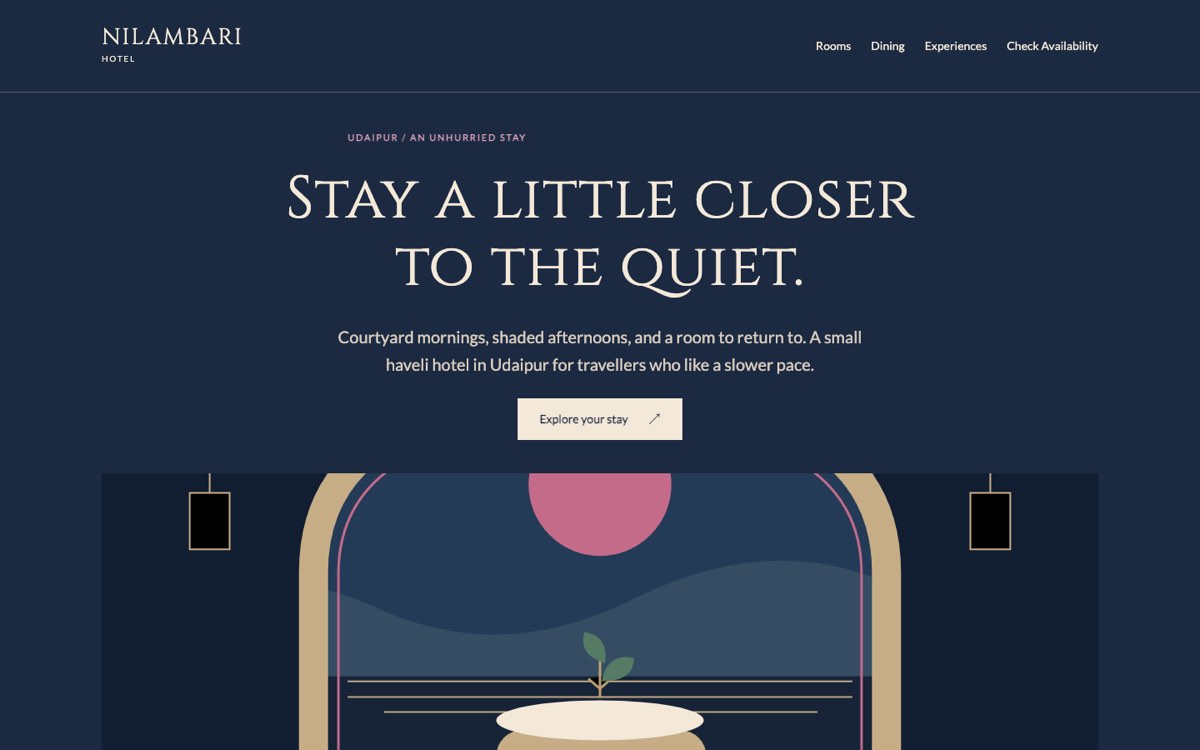
Haveli Nilambari is a fictional boutique hotel in Udaipur, created by VirtueInfo for this demo. It is not a client and has no real address or rating.
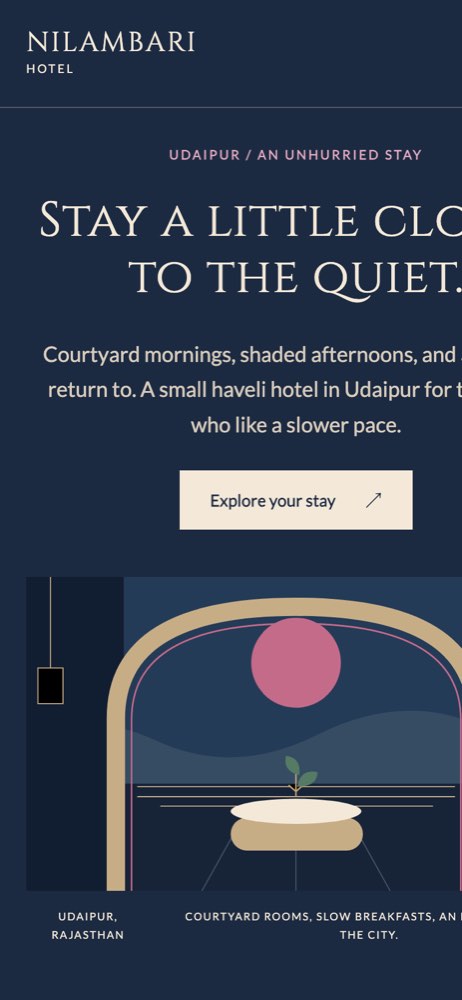
The home page sets the tone with an illustrated panorama and a short introduction, then gives one panel each to rooms, dining and experiences. Each panel links to its own page. A section before the footer explains how dates, room size and replies work, so guests know what to expect before they reach the form.
Rooms, dining and experiences
The rooms page lists a courtyard room, a terrace room and a family suite, each with a starting rate per night, how many guests it sleeps and a link to enquire about dates. The text describes beds, light and space plainly and says that bedding, access and inclusions are confirmed in the reply. The dining page covers breakfast in the courtyard, a light midday menu and dinner set for the party, with a clear note about allergies and dietary needs. The experiences page helps guests plan a slower day, with the front desk arranging cars and guides and confirming any price in writing.
The stay enquiry
The check availability page is the main feature. Guests pick arrival and departure dates, a room type and the number of guests. The summary counts the nights as they choose. The form stops an arrival date in the past and a departure that comes before arrival. It also flags a party of three or four in a room that sleeps two, before the enquiry is sent. The form then asks for a name, an email and a message, nothing more. In the demo it confirms that nothing was sent; on your site it reaches your reservations desk.
Local SEO built in
Every page carries Hotel structured data with the business name, city and contact details, and inner pages add breadcrumbs. Page titles combine the page subject with the city, such as rooms in Udaipur or courtyard dining in Udaipur, which matches how travellers search. The name, city and phone in the footer should match your Google Business Profile exactly, and we check that at launch.
The demo pages are not indexed, because the hotel is fictional. A client site launches fully indexable, with a sitemap and clean URLs. Fonts are self-hosted and the artwork is SVG, so pages load quickly even on hotel guests' patchy mobile data.
Notes for each market
India
Many Indian guests ask about rooms on WhatsApp before they email, so we add a WhatsApp link beside the form. Rates are shown in rupees with a note on GST, and the reply can include UPI or card payment links. A Hindi version helps domestic travellers.
USA
American guests expect rates in US dollars and clear notes on taxes, resort or service fees and the cancellation policy. Use American spelling and a month-first date format. Accessibility details for rooms are worth stating plainly.
Canada
Rates go in Canadian dollars with applicable sales taxes noted. A hotel in Québec should publish in French and English. Canadian spelling and metric distances fit most guests.
Australia
Australian guests expect the rate shown to include GST. Show your ABN in the footer and use Australian spelling. Notes on parking and check-in times help travellers arriving by car.
Finland
A Finnish hotel site usually needs Finnish and English, and Swedish where the region calls for it. Prices are in euros with VAT included, and the business ID goes in the footer. Sauna times and breakfast hours are details guests look for.
What we deliver and how the project runs
We design the site around your property and brand, using your own photographs or commissioned illustration. We write the room, dining and policy copy with you from real details, so nothing on the site promises more than the hotel offers. Enquiries connect to your email, WhatsApp, your CRM or your booking system. Our UI and UX design work tests the room choice and enquiry flow on phones before launch.
After launch you get edit access for rates, rooms and seasonal notes, plus a short walkthrough for the front desk. We can keep looking after hosting, security updates and changes as your rooms or prices change. Send us your current rooms and rate details through our contact page and we will prepare a quote for your hotel site.