What shoppers need from a boutique website
A boutique's customers come in three groups. Locals want the hours, the address and a reason to come in and try something on. Shoppers in other cities want to buy online with confidence, so they need sizes, fit advice, shipping costs and the returns policy before they reach the checkout. Gift buyers want something under a set amount, ideally one size.
The website has to serve all three without feeling like a department store. It should show what is on the rail this week, let people filter by the sizes they wear, explain fit in plain terms, make pickup as easy as shipping and carry some of the shop's personality through outfits and styling.
How our demo site handles it
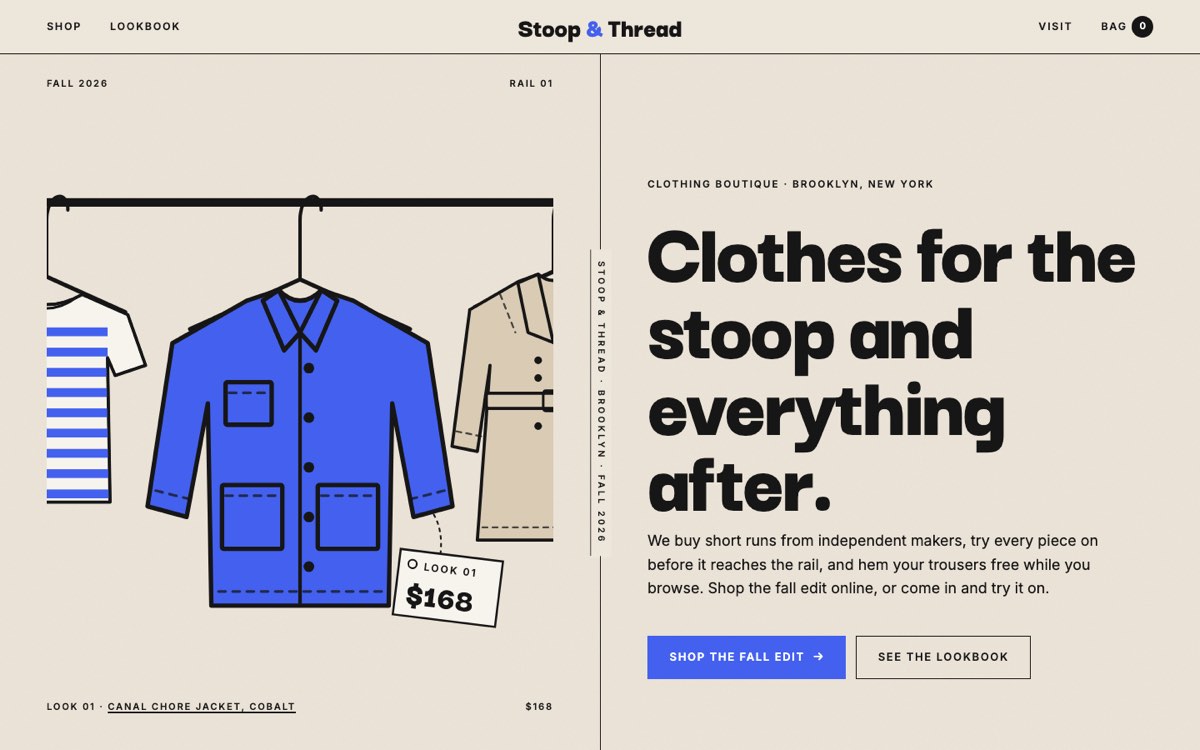
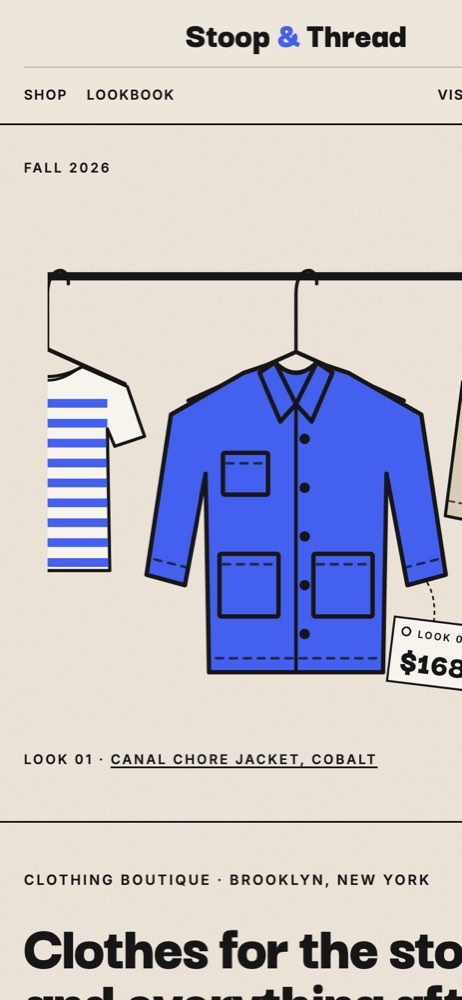
We built a demo for Stoop & Thread, a fictional clothing boutique in Brooklyn, New York. VirtueInfo created the shop, its twelve products and its sample prices. The demo is in US English, and every garment is a flat drawing rather than a photograph.
Home, shop and lookbook
The home page opens on the fall edit, then shows four pieces new this week. A short section explains how the shop buys: short runs from independent makers, every piece worn for a day before it goes online, and free hemming on trousers and jeans. A fit help block shows the size chart and offers fitting appointments. Sample reviews are labeled as samples, and the visit section lists hours, phone, shipping and returns.
The shop page has filters for size, color and price band, with a running count of pieces shown. Choosing a color redraws each matching garment in that color. If nothing matches, the page suggests clearing a filter or calling to check the stockroom. The lookbook styles four outfits and lists the pieces in each with links to buy.
Product pages, bag and checkout
The signature feature is the product page and the bag behind it. Color swatches recolor the large garment drawing, sizes that have sold out are disabled, and a size guide in inches opens in a dialog with notes on how to measure. Each product has a fit note, care details and the shipping and returns terms.
Adding a piece without a size shows a clear error. The bag keeps its contents in the browser, so it is still there on the next visit. Customers can change quantities or remove lines, and the summary shows the subtotal and shipping, plus how much more they need for free shipping. Checkout asks for email and name, offers shipping or free pickup, and checks the ZIP code only when shipping is chosen. The final step is a placeholder where your payment provider's secure checkout opens, so card details never touch the site.
Local SEO built in
The business is marked up as a schema.org ClothingStore with its city, area served and opening hours for each day. Every product carries Product markup with brand, price and availability, and the shop page lists the range as an ItemList. Page titles follow the searches a local shopper makes, such as a clothing boutique in the neighborhood or a seasonal lookbook.
The name, area, phone and hours match your Google Business Profile, which matters for a shop that wants foot traffic. Drawings sit in one SVG file and fonts are self-hosted, so product pages load quickly on a phone. Because Stoop & Thread is invented, its demo stays out of search results, while a real clothing boutique site launches open to Google with a sitemap and canonical tags.
Notes for each market
India
Show prices in rupees and size charts in centimeters or inches, depending on your customers. Checkout should take UPI and cards, and cash on delivery is still expected by many shoppers. A WhatsApp button for size questions and order updates is often used more than email.
USA
Use American spelling, dollar prices and sizes in US numbers with inches, as the demo does. Sales tax is added at checkout and depends on where the order ships. Spell out the returns window and who pays return shipping.
Canada
Show prices in Canadian dollars with tax added by province, and give measurements in centimeters as well as inches. A boutique in Québec needs a French version of the shop, product names and checkout included.
Australia
Use Australian spelling, dollar prices and Australian sizes, which differ from US numbers. Prices are normally shown including GST, and your ABN belongs in the footer.
Finland
Prices go in euros with VAT included, and sizes follow European numbers. Shoppers expect Finnish and often English, with Swedish in some areas, and checkout should support local bank and mobile payments. Show your business ID (Y-tunnus) and a clear returns policy for online orders.
What we deliver and how the project runs
We design the site around your brand and your rail, not the demo's cobalt and oatmeal. We set up the product data with you: names, fit notes, sizes, colors and care details, along with shipping and returns terms. Then we connect checkout to your payment provider and send orders and pickup requests to your email or store system. Our e-commerce solutions cover stock syncing if you also sell in the shop.
The project starts with a call about your customers and how you buy, then a design for you to review, then the build. At launch we check that the name, hours and categories on the site agree with your Google Business Profile, so the two support each other. At hand-over we show you how to add new pieces and mark sizes sold out, and we offer maintenance through each season.
If you want a site like this, ask us for a quote and tell us what you sell and how many pieces you carry.